
Green Choice
A flexible option to support SAF and carbon removal
- Support the use of SAF within Lufthansa Group flight operations. While SAF emits a similar amount of CO₂ emissions during combustion as conventional kerosene, its lifecycle greenhouse gas emissions are at least 80% lower.
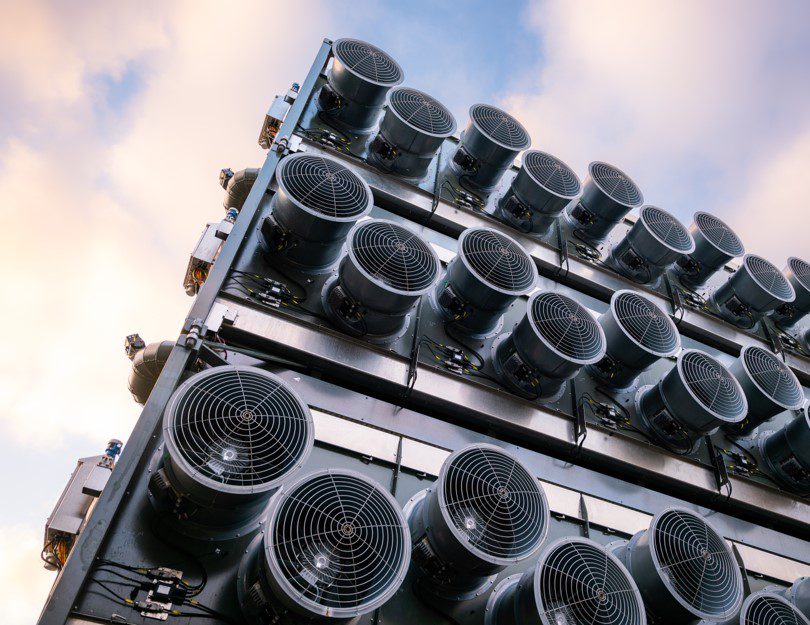
- Support the permanent removal and storage of CO₂ through Direct Air Capture (DAC) in collaboration with Climeworks.
- Choose an AWB-level contribution for an individual shipment or a bulk agreement covering multiple shipments.
SAF is incorporated into Lufthansa Group flight operations and is not necessarily used on the aircraft carrying the individual shipment. DAC removes and permanently stores CO₂ outside the transport operation. Aviation also has climate effects beyond CO₂.
Choose how you want to support SAF and DAC
Green Choice is available for an individual shipment at AWB level or for multiple shipments under a bulk agreement. You can choose from defined combinations of SAF and DAC based on the estimated transport-related CO₂ emissions covered by the agreement.
AWB-level contribution
At AWB level, Green Choice offers packages combining different shares of SAF and DAC. The contribution must be booked before departure and is based on the shipment’s entire routing and final shipped gross weight. It cannot be applied to only part of the routing or shipment weight, or booked as a fixed amount. The contribution is based on estimated transport-related CO₂ emissions. The SAF is used within 6 months in the Lufthansa Group network and not on the aircraft transporting the individual shipment.
| Package | Description |
|---|---|
|
Aviation Tech Pioneer |
Contribution addressing the estimated shipment-related CO₂ emissions through 85% SAF and 15% DAC. |
|
SAF Choice |
SAF contribution corresponding to the selected level of the estimated shipment-related CO₂ emissions.
Option 1: 85% SAF
Option 2: 60% SAF
Option 3: 30% SAF
Option 4: 10% SAF
|
Bulk agreement
Green Choice can also cover multiple shipments under a bulk agreement. Customers can define a contribution for a specified period, either retrospectively for completed shipments or prospectively based on expected transport volume. For retrospective agreements, the contribution is calculated using the estimated CO₂ emissions associated with freight transported by SWISS WorldCargo during the defined period. Prospective agreements use expected transport volumes and should be reconciled against actual transported volume according to the applicable agreement. Customers can select defined combinations of SAF and DAC.
| Package | Description |
|---|---|
|
Aviation Tech Pioneer |
Contribution addressing the estimated transport-related CO₂ emissions covered by the agreement through 85% SAF and 15% DAC. |
|
SAF Choice |
SAF up to 85% CO₂ reduction, with flexible combinations via DAC.
|
Learn how SAF and DAC work
Green Choice supports two different measures: the use of SAF within Lufthansa Group flight operations and permanent CO₂ removal through DAC. Learn how the two measures work and where their environmental effects occur.
Lower lifecycle greenhouse gas emissions with SAF

Capturing and permanently storing CO₂ through DAC
How we estimate transport-related CO₂ emissions
A defined scope for CO₂ estimates
SWISS WorldCargo applies a Well-to-Wheel (WTW) methodology that estimates the CO₂ emissions associated with the air and road transport covered by the shipment. The calculation does not include upstream emissions from producing and supplying the fuel or climate effects beyond CO₂.
Calculation methodology
Based on operational data and estimates
Distance and payload assumptions
Distances are estimated using Great Circle Distance and Vincenty’s formulae. For belly cargo, payload allocation assumes an average passenger weight of 100 kg, including luggage.


